
A first safari is often imagined long before it’s experienced. For many travellers, it arrives first in the mind: a vision of close encounters and dramatic sightings, unfolding one after another. When reality doesn’t immediately match that vision, disappointment can quietly creep in, not because the safari is lacking, but because expectations were shaped elsewhere – often from watching wildlife documentaries that have been filmed over months, if not years, and then moulded into a best-of-one-hour sequence.
A safari isn’t like that. Africa doesn’t perform on cue and that is precisely its power, its the unexpected that makes it so magical. Learning to balance expectation with reality is the key to having an more enjoyable safari. Below are some of the things first timers get wrong:
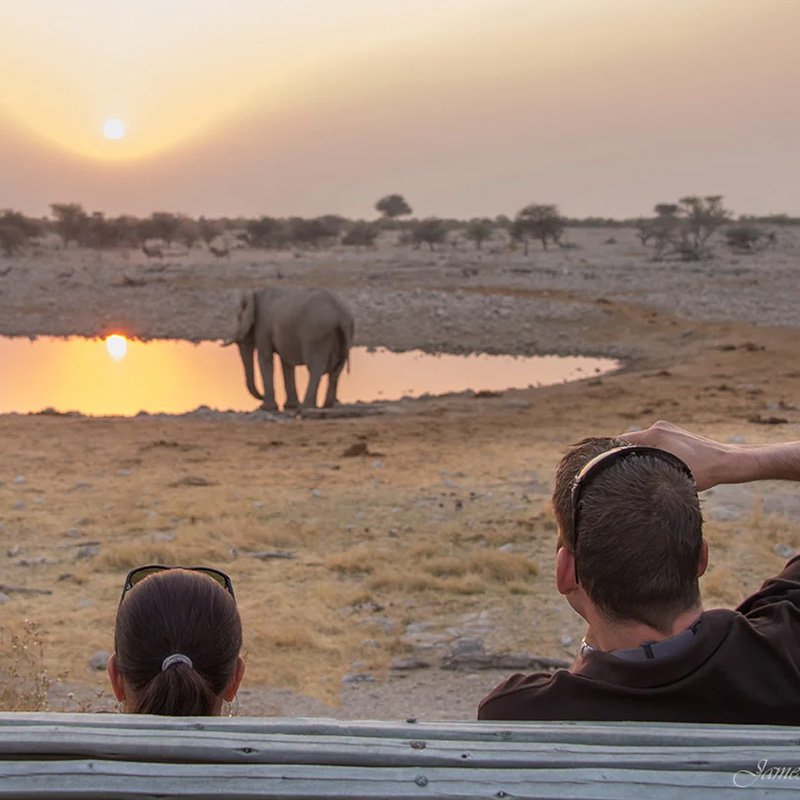
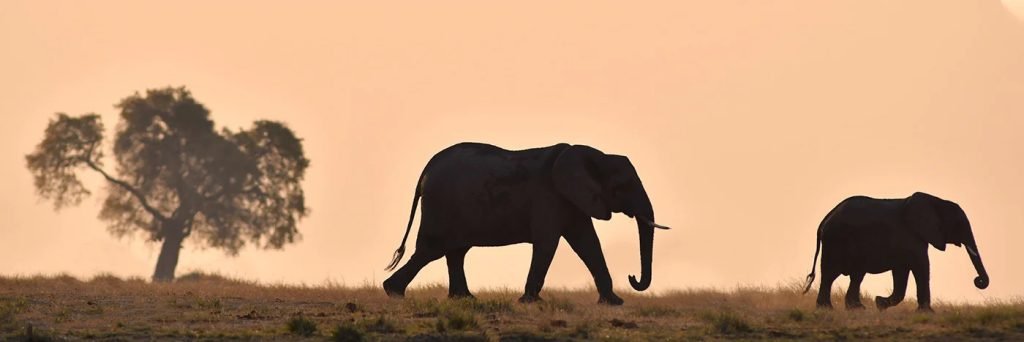
Clients in Namibia enjoying the tranquillity of sunset at the camp waterhole
Expecting Constant Action
One of the most common misconceptions is that a safari is a continuous stream of sightings.
In truth, much of the magic happens spontaneously. Wildlife moves according to weather, light, temperature, and instinct, not schedules. There are pauses, long stretches of quiet, where nothing obvious appears to be happening. But when it does, it’s exciting because it balances, yin and yang, drama with quiet. Learning to appreciate anticipation over instant gratification, transforms a safari from passive viewing into active awareness.
Measuring the Experience by Numbers
“How many lions did you see?”
It’s a natural question however, one that often misses the point. There is so much more to a safari than the number of animals seen. A single sighting, properly understood, can be richer than numerous rushed encounters. When behaviour, context, and environment are explained, it becomes an immersive experience that carries depth. A safari is not a checklist – It’s a ever changing story.
The less you become attached to the checklist, the more complete your safari experience will feel.
Underestimating the Importance of the Guide
First-time guests often assume the lodge, reserve and vehicle, defines the safari.
In reality, the guide defines it.
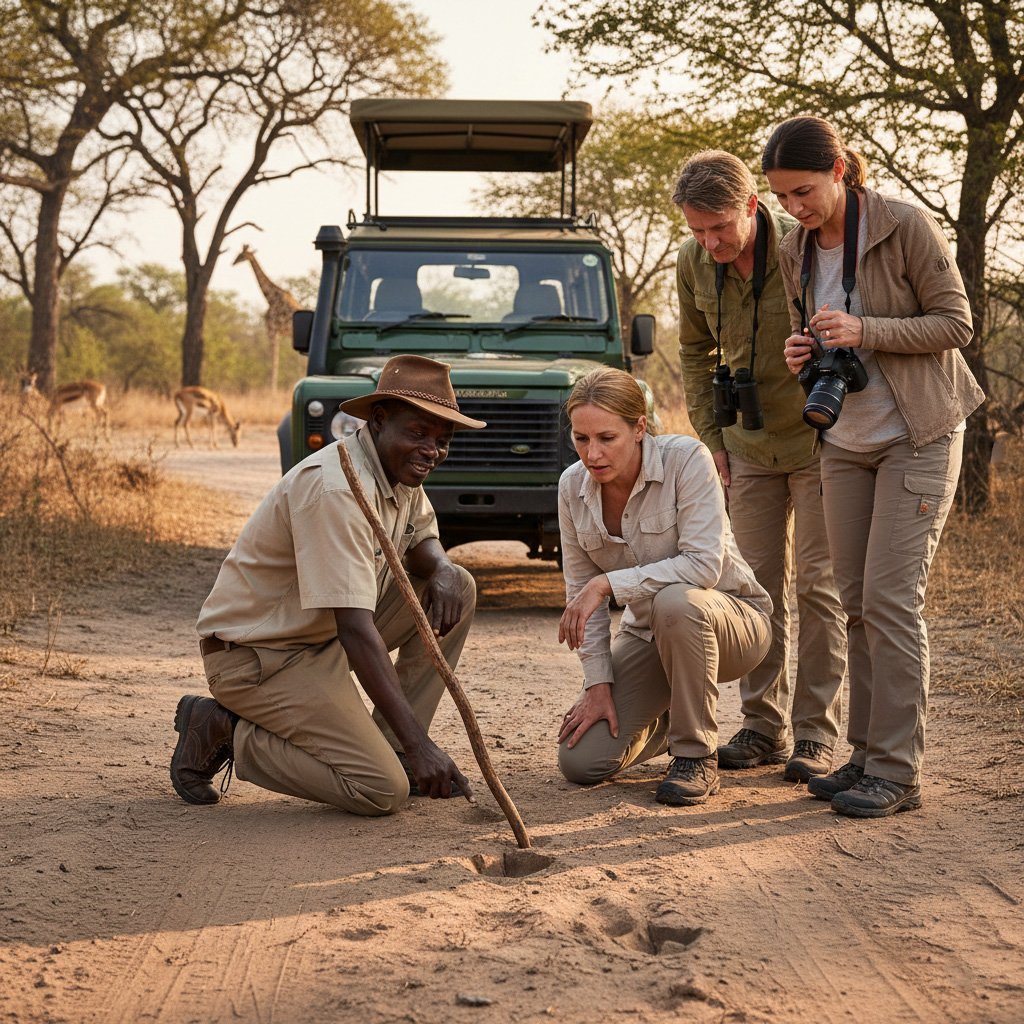
A great guide doesn’t just find animals, they interpret the landscape, read behaviour, anticipate movement, and create space for understanding. They slow things down when needed and move decisively when the moment calls for it. The difference between seeing wildlife and understanding it lies almost entirely in who is guiding you.
Great Expectations
Safari’s are shaped by the elements. Dust, wind, heat, cloud, rain – these are not inconveniences. They are part of the story and animals adjust their behaviour accordingly. Some of the most atmospheric moments occur in conditions that would be considered “imperfect”.
At the end of our safaris I always ask guests what they enjoyed, didn’t enjoy, if the tour meet expectations. In Nov ’25 I was freelance guiding a birding photo tour from Taiwan. The one guest replied, he expected to see more birds (to be fair the itinerary wasn’t perfect). Another guest, said she loved the tour as she had no preconceived expectations and as such everything was a plus.
Which made me realise, when expectations are lowered and allow for unpredictability, it’s hard to be disappointed.
Treating Photography as the Goal
Many first-time safari guests feel pressure to capture everything. To document their entire trip for themselves or their social media followers. And while photography can absolutely enrich a safari; but when it becomes the only objective, presence often suffers. The most meaningful moments are frequently the ones not photographed at all, such as how a lion roar makes you feel. When you allow photography to support the experience rather than dominate it, the safari becomes deeper, and more memorable.
Thinking Bigger Is Always Better
There’s a tendency to believe that the most famous animals or the closest sightings are automatically the best. In reality, some of the most rewarding moments involve subtle behaviour or species many guests initially overlook. Understanding relationships within the ecosystem – predators, prey, birds, insects, landscape – reveals a far richer story than proximity and a few select animals.
Safari rewards curiosity.
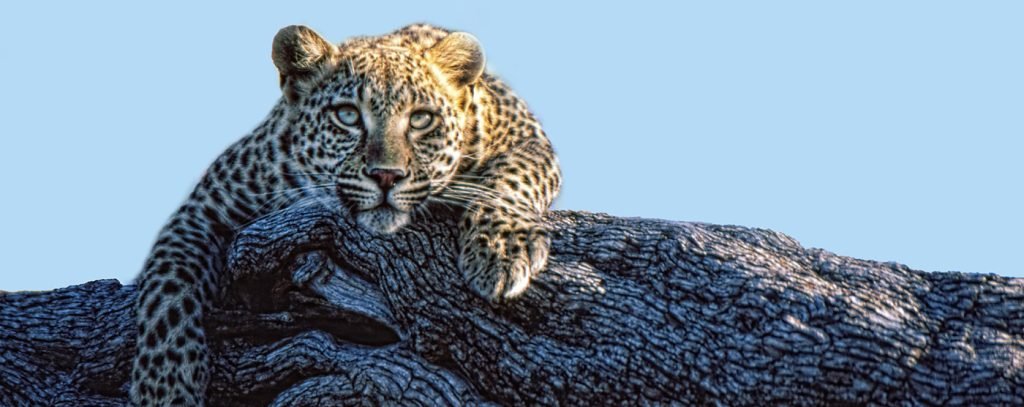
I was with fellow guide and friend Murray Letcher, we were in the Shingwedzi region of the Kruger trying to find yellow billed oxpeckers (the rarer form), we knew they often frequented large herds of buffalo. We found a herd of baffalo, and scanning carefully with bino’s and I eventually spotted one a yellow billed oxpecker. Murray raised his bin’s to look for it and instead spotted a leopard in the dense grass stalking impala. The leopard stalked, chased and narrowly missed catching an impala. An incredible sighting, which we’d have missed if we weren’t looking for a small little bird.
Safari Times
Time behaves differently in the bush. Early mornings, late afternoons, tend to be peak wildlife times for a reason, in the midday heat, wildlife tends to siesta. Of course this is just a guideline, as wildlife can move at any time. In the above example of the leopard hunt, it happened at midday, on a hot day in early summer, an unusual time for a leopard to be hunting.
As a general its best to be out at sunrise and late afternoons. On overcast or cooler days wildlife, you can stay out longer, and in the cooler winter, wildlife can start to congregate waterholes from mid to late morning. First-time safari travellers may not know these patterns and aim for something more holiday timed, like starting at 9am.
How to Avoid Disappointment
The most fulfilling safaris share a few common threads:
- Arrive curious, not expectant
- Value understanding over spectacle
- Trust the guide
- Embrace stillness
- Let go of control
When you shift your mindset from what will I see to what will I learn, disappointment has nowhere to land. A safari is not a zoo of promised certainty. What it offers instead is authenticity; moments that unfold naturally. And it is precisely this unpredictability that makes your safari unforgettable. If a safari was predictable it would be boring – there would be no mystery, no anticipation, no knowing whats next…
At Safari & Bird, we believe the best safaris unfold on “Africa Time”
Join us for an unforgettable safari: www.safariandbird.com/safaris