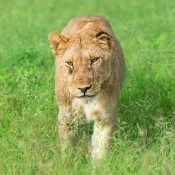

Safari’s most sought-after wildlife, especially for first timers, are known as the “Big Five.”, The 3 heavies (Elephant, Rhino, Buffalo) and the 2 big cats (Lion and Leopard). Incidentally these 5 becoming the most sought-after animals to view on safari had nothing to do with ecotourism and everything to do with hunting. These 5 are considered the 5 most dangerous animals in Africa to hunt on foot. There was an initiative to change the Big 5, with a public choose-your-animal input, but it fizzled out and it seems the Big 5 as we know it now, is permanently ingrained into Safari culture.
There is no doubt seeing a lion on a kill, a leopard draped over a branch, an elephant herd at a waterhole, a rhino mud wallowing or a 1000 strong herd of buffalo is a life-changing experience, but there is a hidden world of wildlife that often goes unnoticed.
If you want to truly “see” the bush, you have to look smaller, look closer, and sometimes, stay up a little later. Here are the “secret” stars of the South African wilderness that every nature lover should have on their radar.
1. The Elusive ‘Secret Seven’
Beyond the big cats, South Africa is home to a group of elusive, mostly nocturnal creatures, known as the Secret Seven. Spotting any of these is a badge of honor for even the most seasoned safari-goer:
- The Pangolin: Sometimes nicknamed a “walking pinecone,” this scaly anteater is one of the most endangered and rarest sightings in the wild.
- The Aardvark: Its name means “earth pig” in Afrikaans. This bizarre-looking creature has the snout of a pig, the ears of a rabbit, and the tail of a kangaroo.
- The African Civet & Large-spotted Genet: These cat-like carnivores boast stunning, intricate patterns and are frequently spotted on night drives.
- The Serval & Caracal: While the leopard gets the fame, these smaller cats are the true acrobats of the bush, capable of leaping meters into the air to snatch birds mid-flight.
- The Porcupine: Africa’s largest rodent, covered in a formidable suit of black-and-white quills.
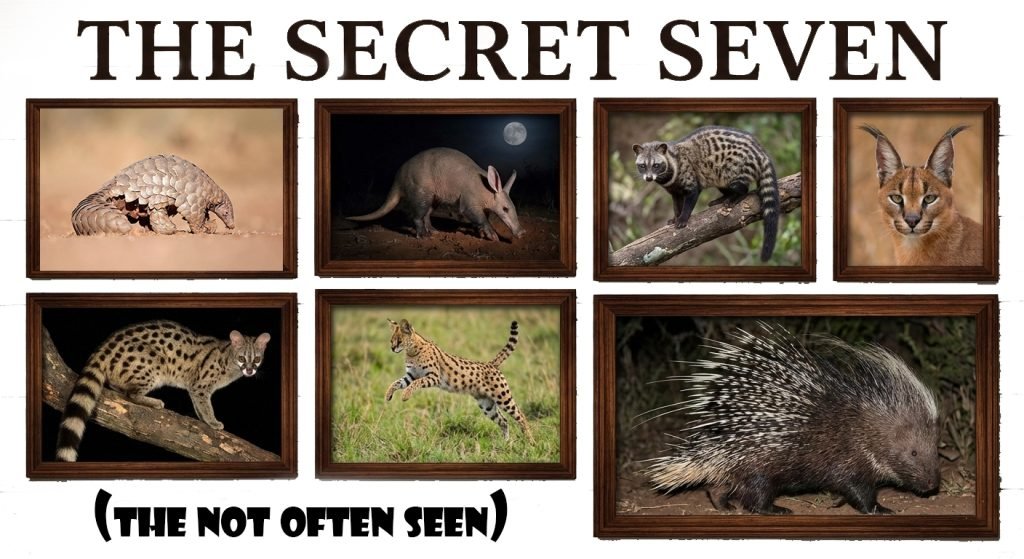
Clockwise from Top Left: Pangolin, Aardvark. African Civet, Caracal, Large Spotted Genet. Serval, Porcupine
2. The ‘Little Five’: A Masterclass in spotting
Of course, with a “Big 5” it wasn’t long before a “Little Five” was created to remind visitors that the small things are just as fascinating as the big ones. Each one shares a name with its larger counterpart:
counterpart:
| Little Five | Fun Fact |
| Elephant Shrew | Not actually a shrew! Bizarrely its closely related to elephants – not rodents. |
| Leopard Tortoise | Named for its beautiful gold-and-black spotted shell. |
| Rhino Beetle | Proportionately one of the strongest animals on Earth; it can lift 850 times its weight. It has a horn like a Rhino |
| Ant Lion | An insect larva that digs conical sand pits to trap unsuspecting ants. It named after the lion for the ferocious way it attacks its prey. |
| Buffalo Weaver | A social, noisy bird known for building messy, communal twig nests. Its dark plumage and social behaviour is where the name originates from. |
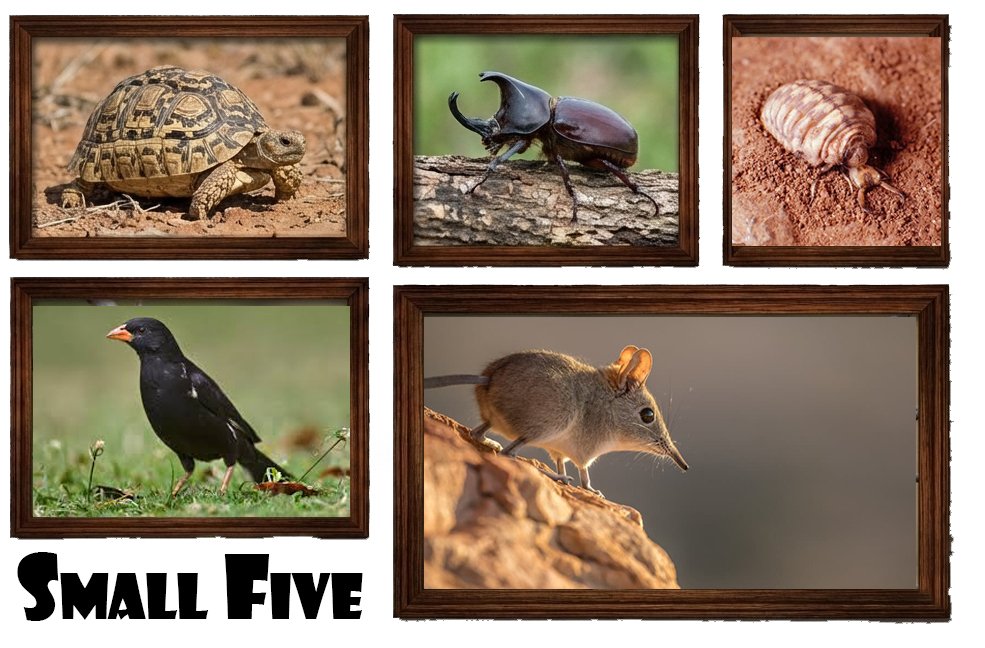
Clockwise from top left. Leopard Tortoise, Rhino Beetle, Ant Lion, Buffalo Weaver, Elephant Shrew
3. Painted Wolves
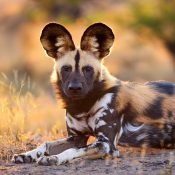
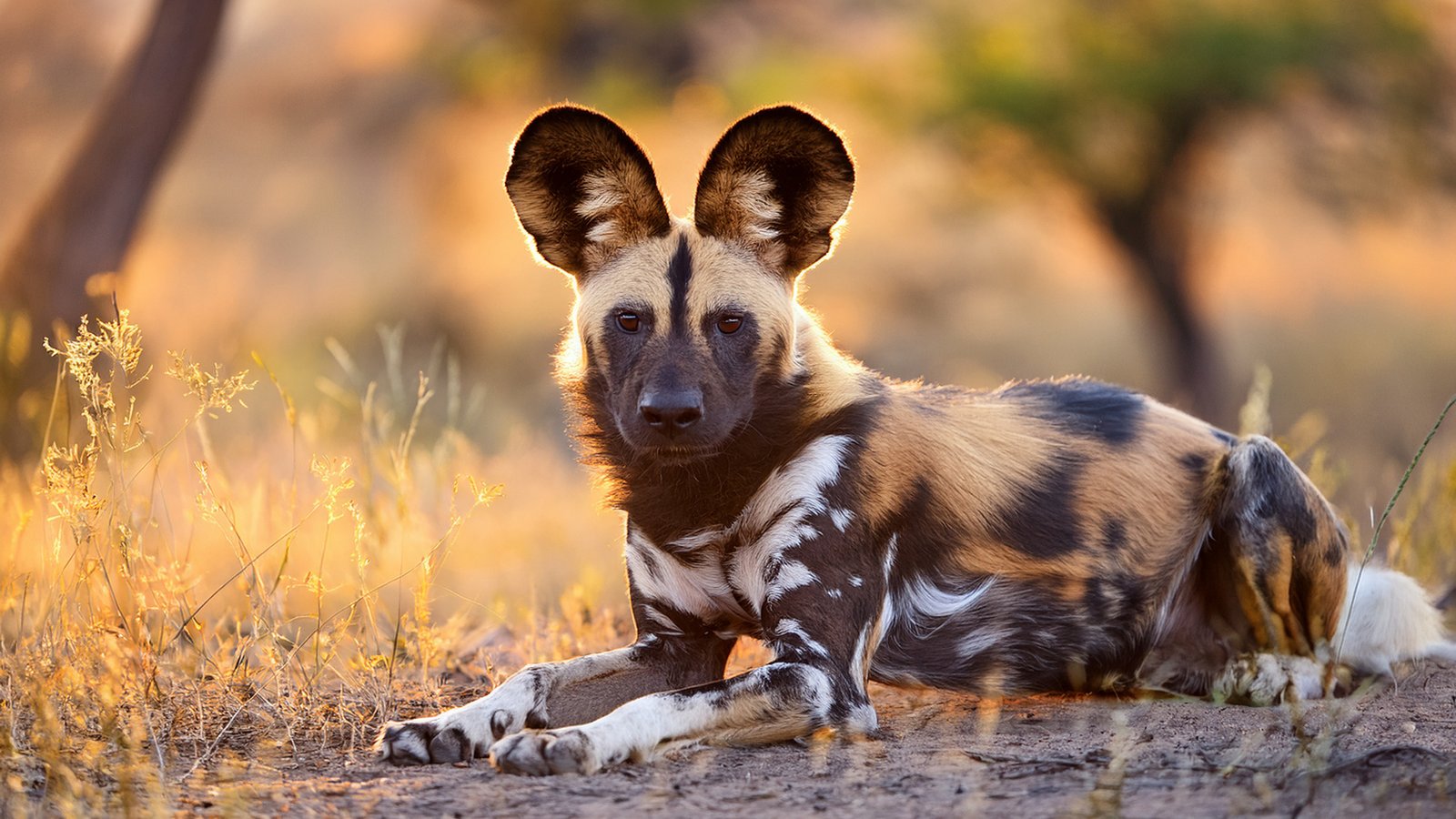
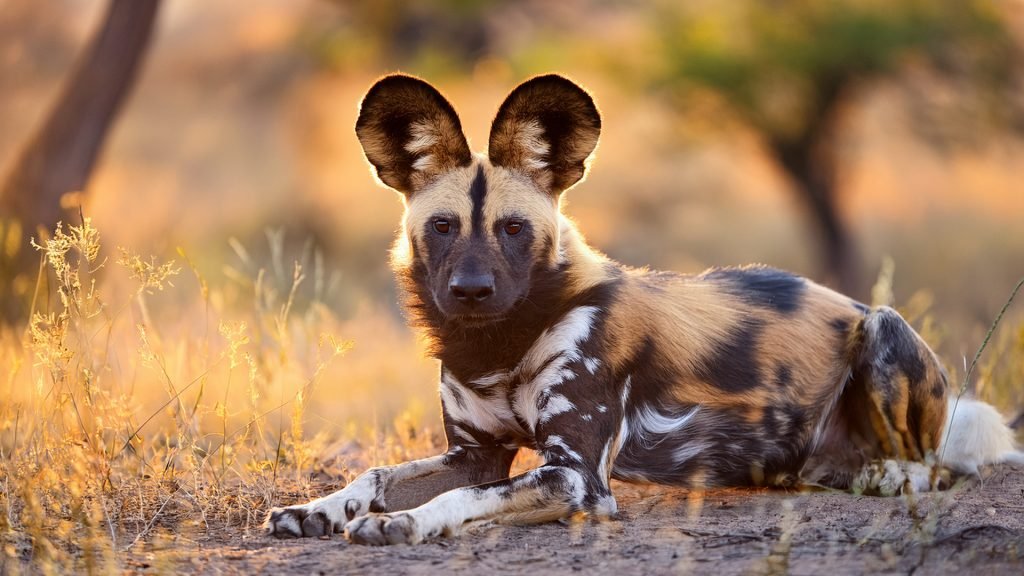
Though not part of the Big Five, Painted Wolves or African Wild Dog is arguably the most exciting predator to witness. They are highly social, extremely intelligent, and are one of the world’s most efficient hunters – boasting a success rate of approx. 80%. Because they are critically endangered, a sighting in the wild is a rare privilege.
Tips for Finding the “Secret” Wildlife
- Book a Night Drive: Many of South Africa’s most interesting species only emerge after the sun goes down.
- Listen to Your Guide: When your guide stops the vehicle to look at a hole in the ground or a small bird, pay attention! They are showing you the complex web of the ecosystem.
- Visit the Arid Regions: Places like the Kalahari or the Karoo are hotspots for “special” sightings like meerkats, bat-eared foxes, and aardwolves.
Discover the Unseen South Africa
The Big Five may be the headline act, but the “secret” wildlife provides the soul of the safari. On your next trip, challenge yourself to look for an elephant shrew, an aardvark, pangolin or serval – you might find the impact of finding one of these seldom-seen creatures stays with you longer than the big ones.
Where to Find the “Secret” Wildlife
While the Big Five are found in many parks, there are a few specific reserves that hold the “gold standard” for spotting South Africa’s more elusive inhabitants.
1. Tswalu Kalahari Reserve (Northern Cape)
Best for: Pangolin, Aardvark, Aardwolf, and Meerkats.
- Why: This is arguably the best place in the world to see the “Shy Five.” Because it is an arid, semi-desert environment with sparse vegetation, spotting elusive nocturnal animals is much easier here. Tswalu is also a hub for pangolin research, and their guides are masters at tracking them.
- Bonus: You can have breakfast with habituated meerkats that might even use your head as a sentry lookout!
2. Madikwe Game Reserve (North-West Province)
Best for: African Wild Dogs and the “Super Seven.”
- Why: Madikwe is famous for its thriving population of African Wild Dogs (Painted Wolves). They also market the “Super Seven,” which includes the Big Five plus Cheetahs and Wild Dogs.
- Bonus: It is a malaria-free reserve, making it the top choice for families looking for rare predators.
3. &Beyond Phinda Private Game Reserve (KwaZulu-Natal)
Best for: Pangolins and Red Duikers.
- Why: Phinda has a world-renowned pangolin reintroduction program. It is one of the few places where sightings of these “scaly anteaters” are semi-regular rather than once-in-a-lifetime.
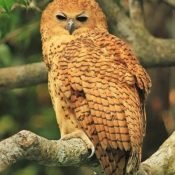
- Bonus: With seven distinct ecosystems, it’s also a hotspot for the rare Suni antelope and the elusive Pel’s Fishing Owl.
4. Sabi Sand Game Reserve (Mpumalanga)
Best for: The “Secret Seven” (Serval, Civet, Genet, etc.)
- Why: While famous for Leopards, the Sabi Sands’ high-quality night drives and expert trackers make it a premier spot for seeing smaller nocturnal carnivores like the African Civet and Honey Badger.
- Bonus: Because the animals are well-habituated to vehicles, you get incredible, close-up views of behavior rather than just a fleeting glimpse.
5. Samara Private Game Reserve (Eastern Cape)
Best for: Aardvarks and Cape Mountain Zebra.
- Why: Samara has gained a reputation as one of the most reliable places in South Africa to see Aardvarks, especially during the winter months when they often emerge during the day to feed.
- Bonus: The “Great Karoo” landscape offers a completely different aesthetic to the traditional savannah, with breathtaking mountain views.
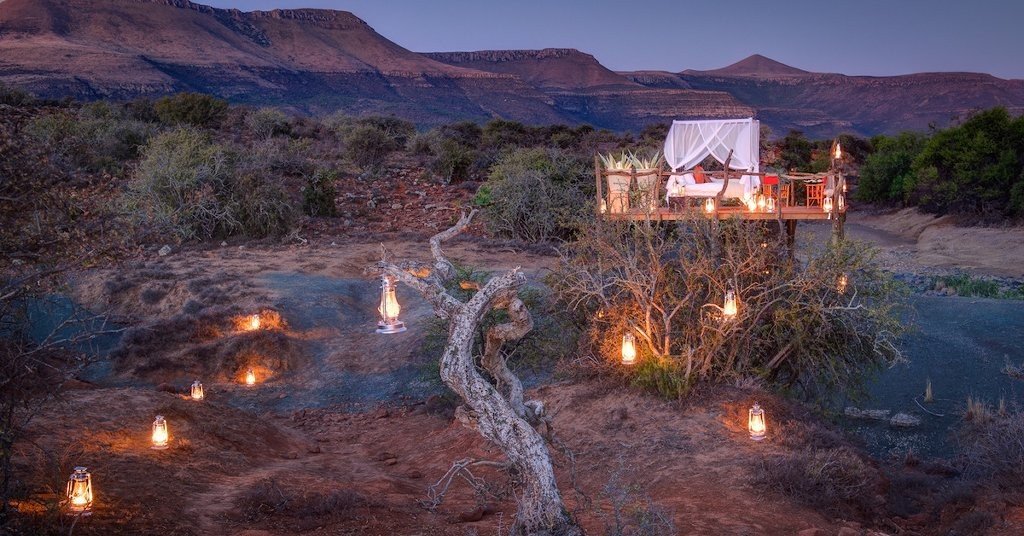
Samara Lodge, Karoo
Bespoke Safaris
Join us for a malaria free safari to the Madikwe Game Reserve where we look for the Super Seven, including the elusive painted wolf, plus other rarities like the brown hyena and an abundance of beautiful birds.
Or let us tailor a safari to suit your interests