
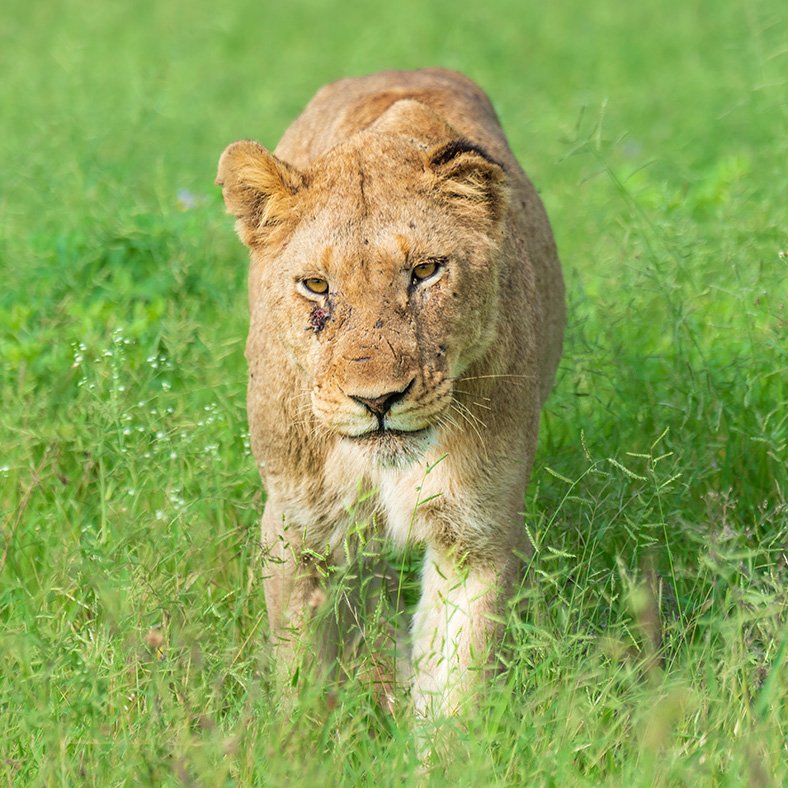
In most of Southern Africa’s safari regions — including Kruger National Park (South Africa), Botswana’s Okavango and Chobe, Zambia’s South Luangwa and Lower Zambezi, Zimbabwe’s Hwange, and parts of Namibia and Mozambique; the rainy or “green season” runs roughly from November to April each year. This period transforms the parched savannah into a vibrant lush, landscape.
Unlike monsoon climates, the rains in safari regions are mainly in the form of dramatic afternoon or evening thunderstorms. Though there can be times when large cold fronts sweep through thw country bringing with them days of rain.
Below are the key advantages of choosing a rainy-season safari:
🌿 1. Lush, Green Landscapes & Dramatic Skies
The parched dry season gives way to a vivid green bushveld, brilliant with fresh grass, flowering plants, and colourful backgrounds. Storm clouds, rainbows, and dynamic skies add depth and drama to your images; something the dry seasons’ dusty palette simply can’t match.
2. Baby Animals & Predator Activity
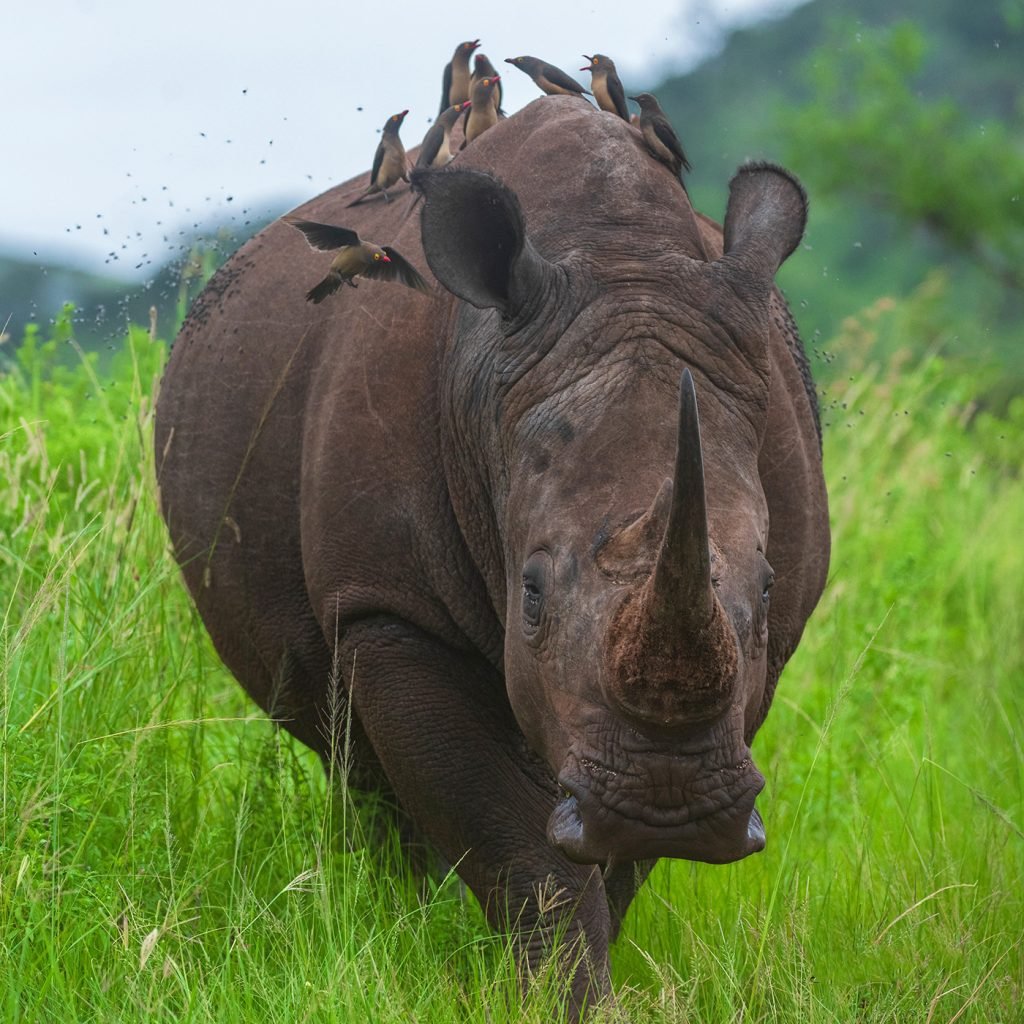
Most large herbivores give birth in the rainy season, taking advantage of abundant food and water. This “calving season” brings a high concentration of foals, calves, and fawns, making for unforgettable moments and emotional photographic opportunities. As newborns attract predators, you’re also more likely to witness predator-prey interactions and intense safari drama.
3. Peak Birding — Resident & Migratory
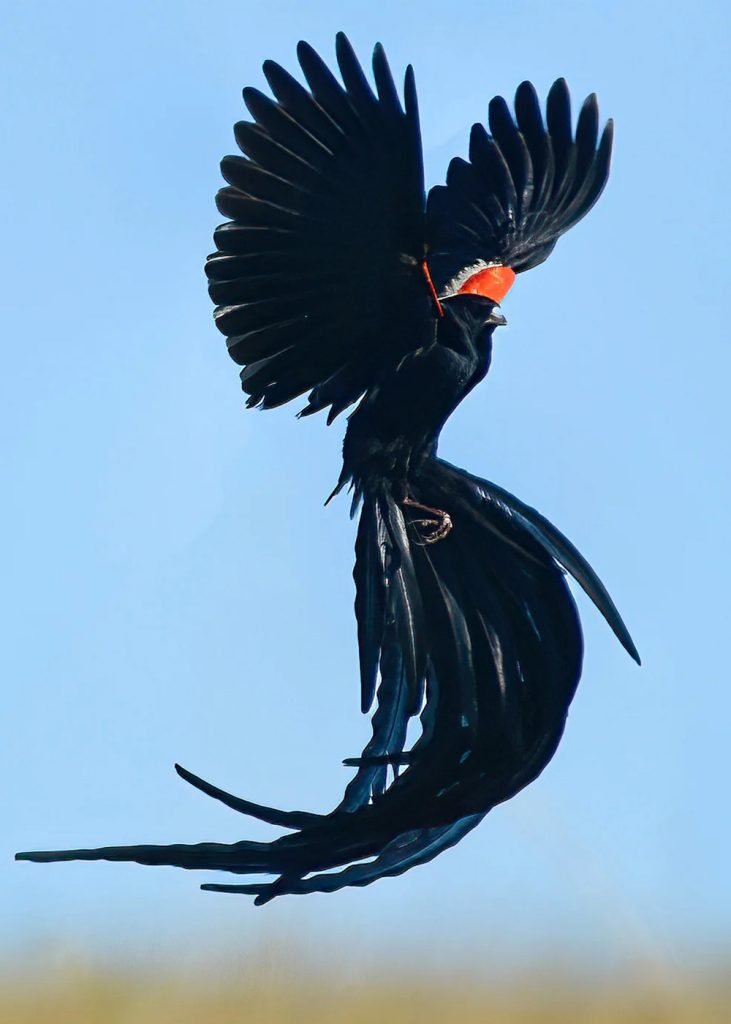
The green season is possibly the best time for birding across Southern Africa. Migratory species return from their journeys, resident birds are in breeding plumage and highly vocal, and waterbird populations swell around newly formed pans and floodplains. From colourful bee-eaters to rare waders and kingfishers, birdlife is abundant and diverse. Birds like the long tailed widowbird below, which I photographed in Wakkerstroom area, only display like this with their long tails and breeding season plumage during the wet season.
4. Fewer Tourists & More Intimate Safaris
Because the rainy season coincides with “low season” in many safari destinations, parks and camps are less crowded than in the peak dry months. You’re more likely to have wildlife sightings and game drives with fewer vehicles, quieter hides and hides that feel more personal, and more attention from guides.
5. Cost Savings & Flexible Travel
Lower demand during the wet season often leads to reduced lodge rates, specials, and flexible booking options. This can significantly reduce the cost of a safari; an attractive advantage for photographers and travellers wanting a premium experience for les
6. Unique Safari Experience
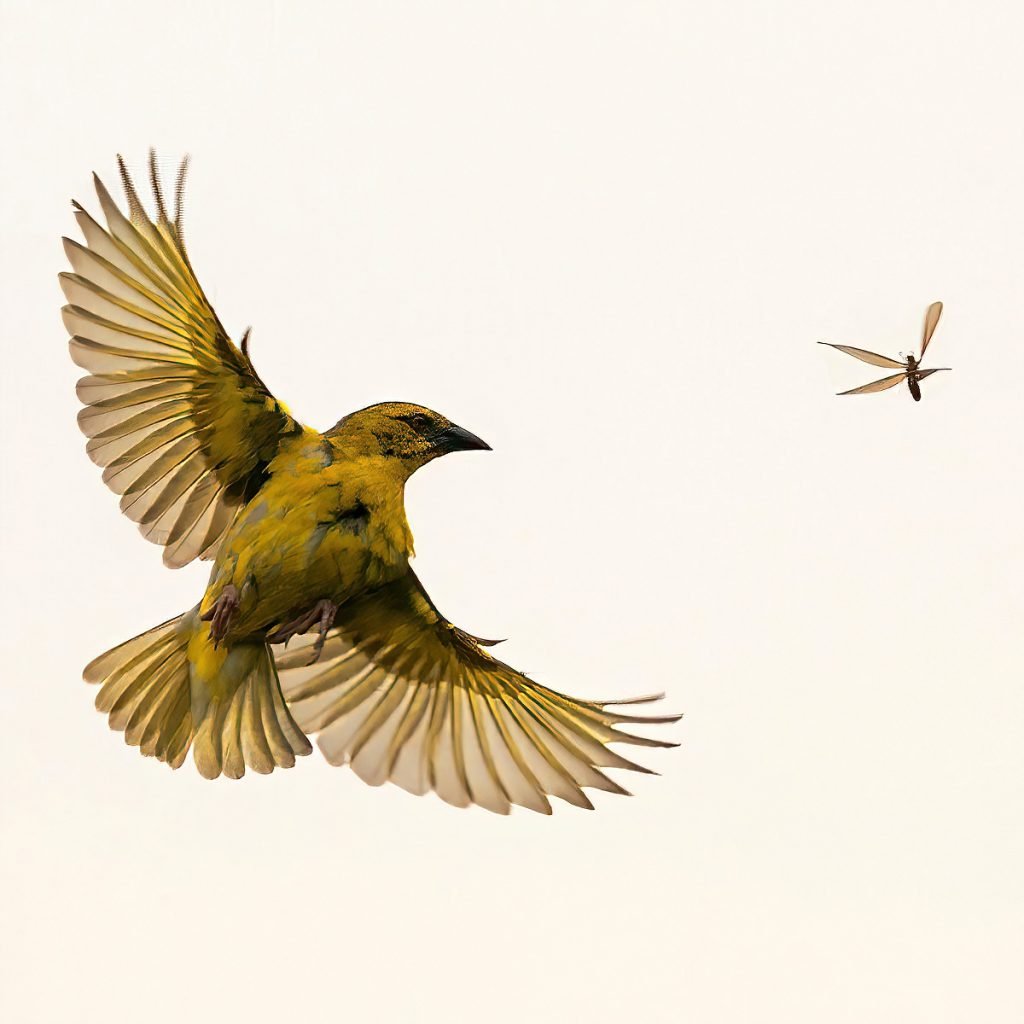
The wet season offers a completely different safari vibe compared with the dry months. The sounds of rain on the plains, the smell of wet earth, roving wildlife in lush surrounds, and unpredictable light all contribute to a safari that feels raw, alive, and evolving — perfect for photographers. I captured this image of a village weaver chasing a winged termite just after a summer storm. This photo is simply not possible outside of the wet season, as without the rains the winged termites can’t emerge and fly.
What About the Challenges?
It’s important to set expectations:
- Heavy vegetation can make some animals less visible, especially in dense bush.
- Bird photography is much trickier in the dense bush and foliage.
- Its rain season, so there will be days when it rains; wet weather gear is essential!
- Mosquito numbers rise, so malaria precautions and repellents are important consideration, unless you join us on a malaria free safari 😉
When it comes to finding birds and wildlife, experienced guides know where to look even in lush conditions, and the rewards — vibrant scenery, baby animals, spectacular birdlife, and quieter camps — often outweigh the drawbacks.
Fior Birders the rain season is a great time to visit, forests and dense savannah aren’t ideal for photography, so we adapt our tours in the wet seasons, recommended grasslands and more open savannah regions.
In Summary
The rainy season isn’t just “off-peak safari time” — it’s a season of drama, colour, and unique photographic opportunity. For travellers who love lush landscapes, thriving birdlife, and a more relaxed pace, the green season can be one of the most rewarding times to experience an African safari.